
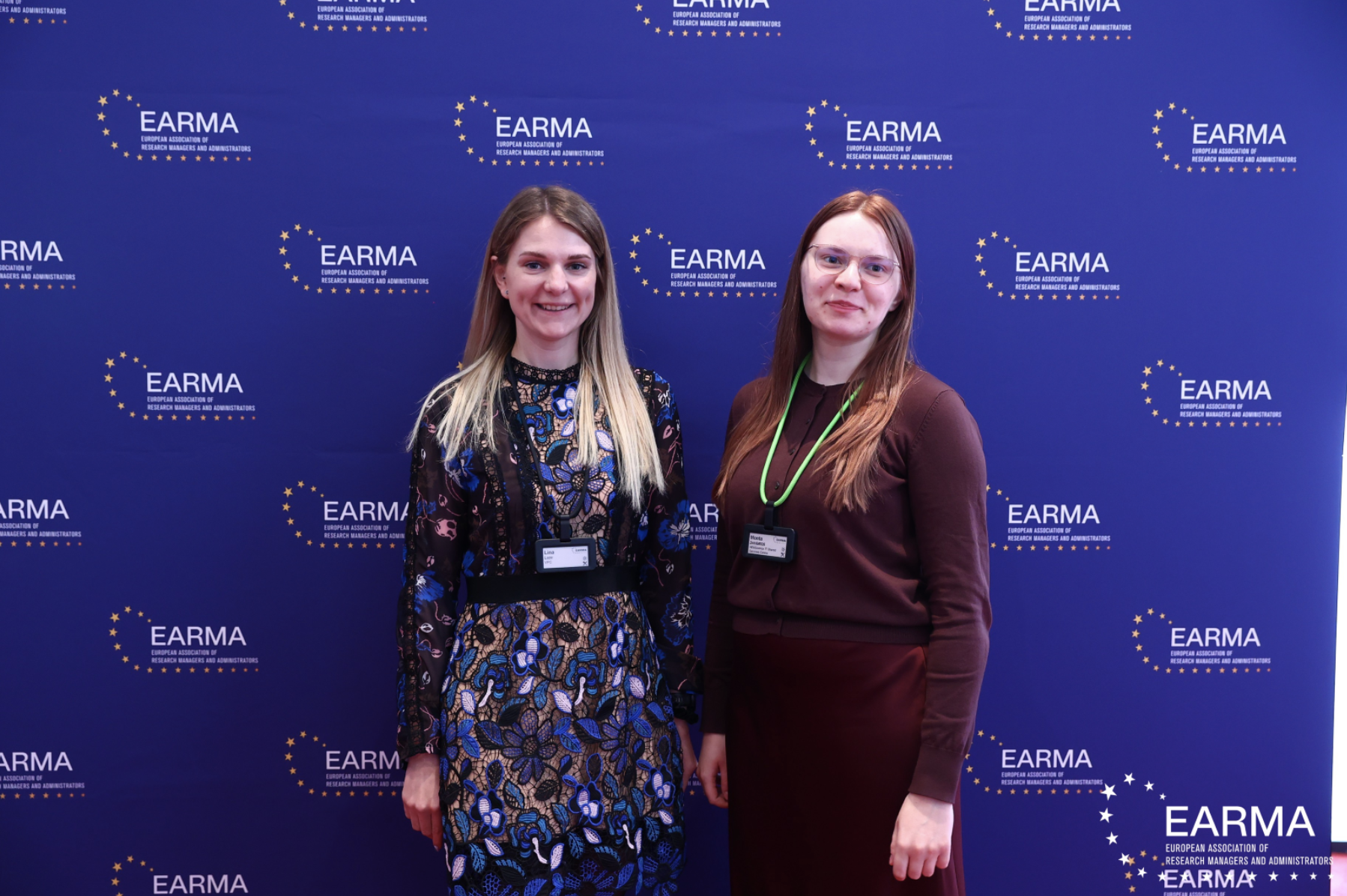

From 5 to 7 May 2026, the Annual Conference of the European Association of Research Managers and Administrators (EARMA) took place in Utrecht, the Netherlands. Rīga Stradiņš University (RSU) was represented at this major forum by data stewards Līna Lāže and Monta Simona Zeltiņa, participating in the exchange of experience and strengthening Latvia’s science administration competencies at the international level.
In the poster session of the conference, Līna Lāže presented a poster on the establishment of the RSU Data Stewards Unit and its successful operation in close synergy with the Higher Education and Science Information Technology Shared Service Centre (VPC).
This year’s EARMA conference gathered over 1,500 industry professionals and it’s main theme “Empowering Research Managers and Administrators as Leaders for Impact” highlighted the role of data specialists as strategic partners within the research process.
Key insights that the stewards brought back from Utrecht:
- Artificial Intelligence as an everyday tool: Presentations confirmed that generative Artificial Intelligence (AI) is already being actively utilized in grant proposal preparation, research mapping, and consortium building. Institutions that have not yet defined their approach to using AI should do so now to maintain their competitiveness.
- Research assessment as a driver for cultural change: Open Science will remain purely at the level of declarations if evaluation mechanisms do not recognize open data and transparent practices. Adhering to the principles of the Responsible Use of Research Metrics (RURM) in Latvian universities is a critical prerequisite for a research assessment system that genuinely fosters the development of Open Science.
- Building professionalism to enhance institutional capacity: The development of Research Management and Administration (RMA) competencies is not just an individual benefit but a matter of institutional competitiveness. Targeted investment in support staff provides a measurable contribution to research quality.
- Fostering leadership and collaboration: The work of a data steward requires the ability to coordinate processes between researchers, departments, institutions and external stakeholders. A systemic approach and leadership skills are crucial to successfully implement FAIR data principles and the optimize data management.
At the poster session, RSU’s presented framework for data curation (policy development, project monitoring, capacity building, and quality control) drew significant interest from international colleagues. Latvia’s unique approach – the formation of a national network of data stewards and the role of VPC in providing a unified research data infrastructure – was particularly highly valued.
The participation of data stewards in this forum provided not only a validation of the path chosen by RSU and VPC but also a valuable impulse for the further refinement of the Latvian research ecosystem in accordance with European best practices.
