
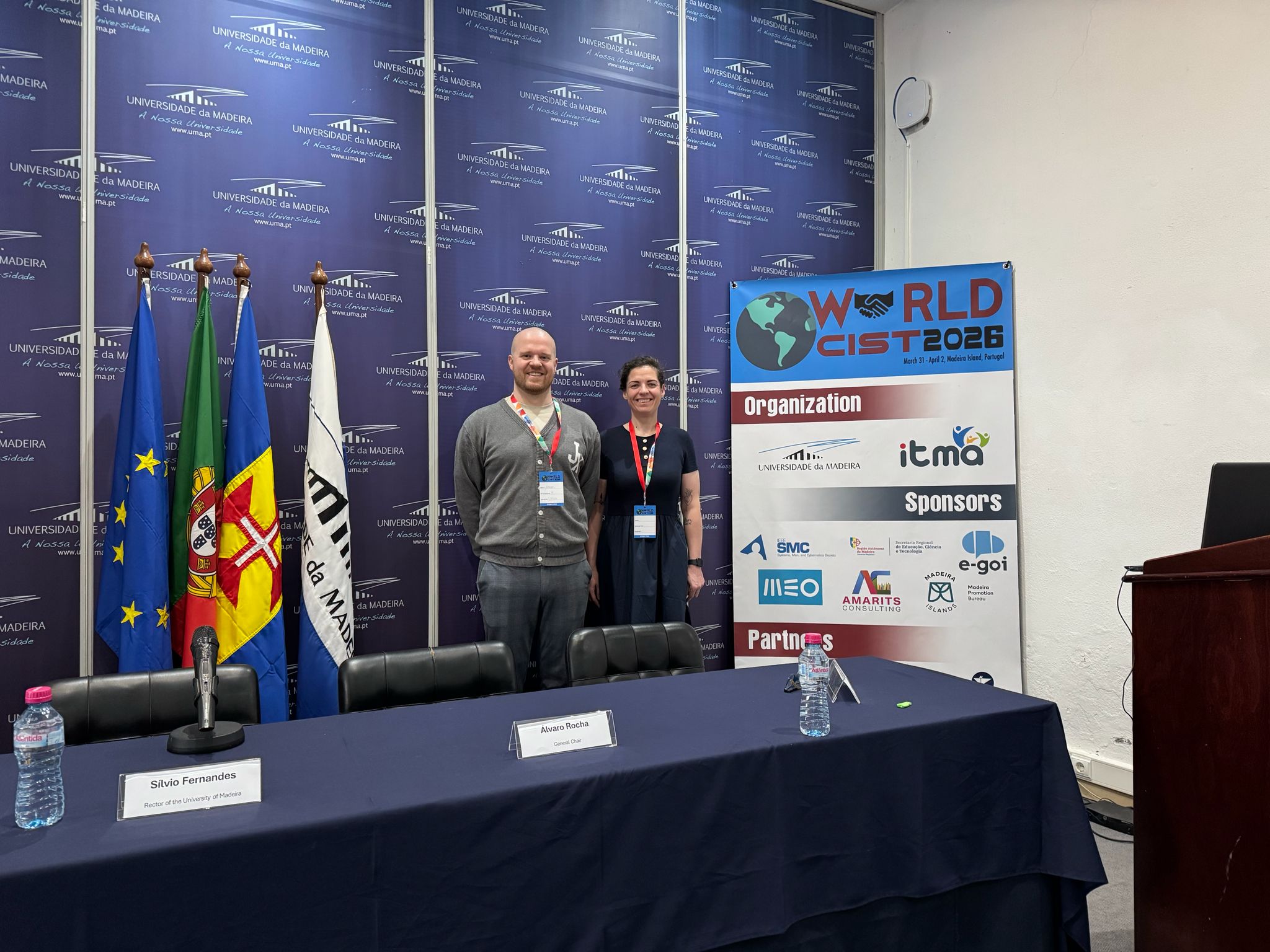
The World Conference on Information Systems and Technologies ’26 took place in Madeira, Portugal, from March 31 to April 2, bringing together researchers, data professionals, and technology experts to discuss the latest trends in information systems, data analytics, and digital transformation. Elīna Peina and Nauris Valainis, representatives of the Higher Education and Science Information Technology Shared Service Centre (VPC), also participated in the conference.
The event programme particularly emphasised the approach to data management as a continuous process, rather than a one-off document. The discussions highlighted the need to develop flexible data management structures that can adapt to changing research needs and technologies. Similar to international initiatives, it was also accentuated that data management plans should be “living documents” that reflect the real research process and facilitate data reuse.
Additionally, there was an emphasis on linking data governance to organisational strategy – especially in sessions on data platforms and data product thinking, where it was demonstrated how data ownership and governance models impact organisational efficiency and innovation capabilities.
From the perspective of data stewards, the accent on data quality and context as the basis for analysis, self-service data access, and data lifecycle management in analytics processes was particularly striking. These approaches demonstrate that data analysis is no longer an isolated function but an integrated organisational competency.
The conference confirmed that modern science is becoming increasingly data-intensive and interdisciplinary. The need to ensure the reproducibility of research data, promote the principles of open science, and develop shared data infrastructures was highlighted.
The discussions emphasised a clear trend: organisations are moving towards a data-centric operating model. This includes implementing data platforms, integrating analytics into business processes, and using data for strategic decision-making. Such an approach not only increases efficiency but also creates new innovation opportunities and competitive advantages.
Modern science and industry increasingly rely on well-managed, analysed, and accessible data – and it is data stewards who are becoming central players in this ecosystem.
