
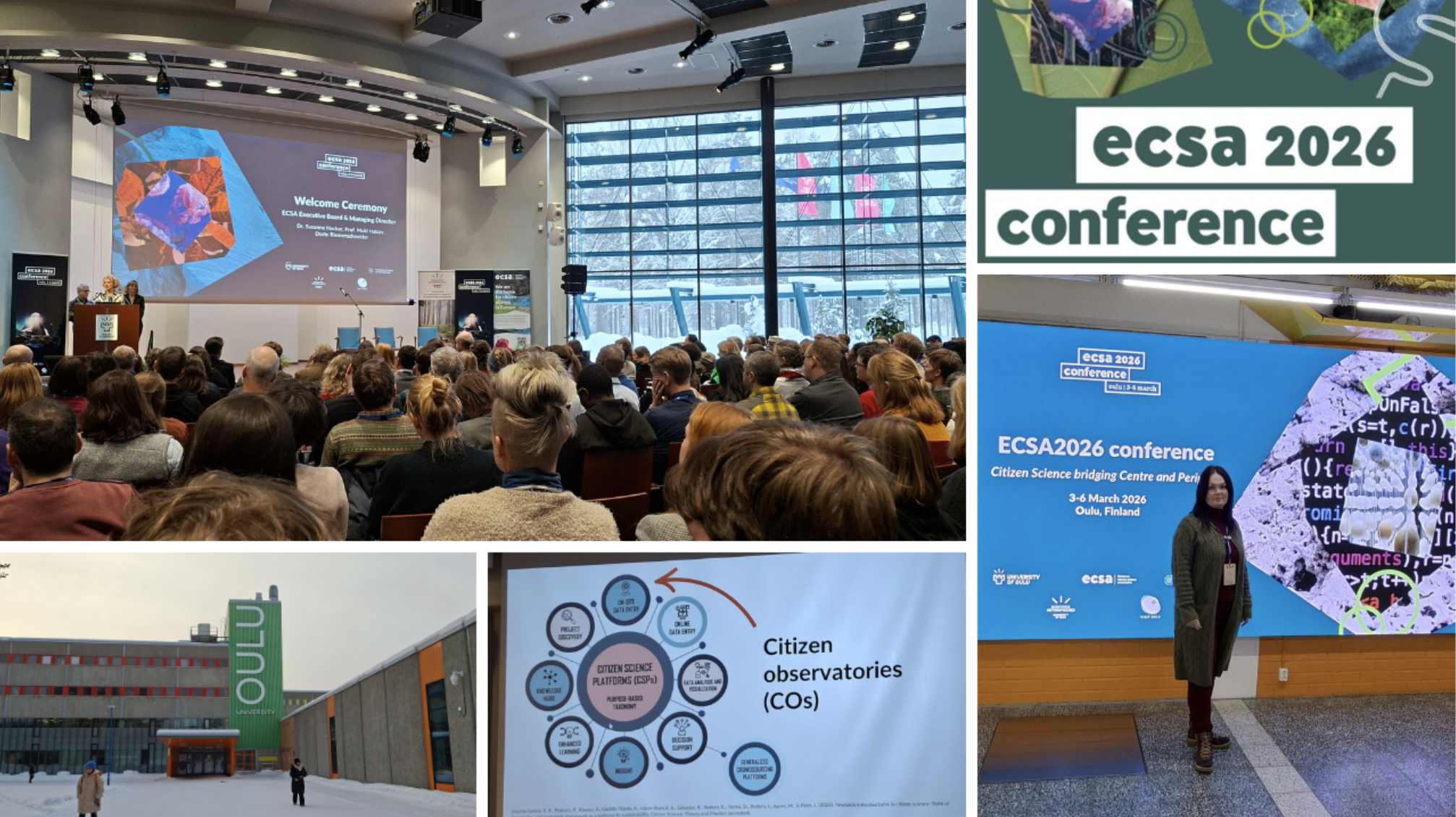
From March 3 to 6, the 6th European Citizen Science Association conference (ECSA 2026) took place in Oulu, Finland, bringing together more than 500 participants to examine the diversity of Citizen Science in different contexts and its potential to reduce inequality and promote access to knowledge, as well as support sustainable and responsible development in the areas of public health, ecology and culture. The conference was also attended by Gita Rozenberga, a representative of the Latvian Data Stewards Network and data steward at the Higher Education and Science IT Shared Services Center (VPC).
During the event, great attention was also paid to data management and infrastructure for Citizen Science projects. Data management plans, the implementation of FAIR principles and the integration of various IT solutions and platforms were discussed. In the discussions, participants focused on practical solutions for improving data quality, validation and reuse, with a particular emphasis on data completeness. Methods were also looked at for promoting citizen participation in data collection throughout the year, covering a wider range of observations – from everyday to rare species. The use of artificial intelligence (AI) was also separately analysed, concluding that it can serve as an assistant in data processing but does not replace the judgements and interpretations of amateur researchers.
The ECSA 2026 experience demonstrates that active public engagement in research can bridge social, geographical and institutional divides, promoting the flow of high-quality and accessible data. Citizen Science is an important component of Open Science, where research data stewards have the opportunity to expand their role and support.

