
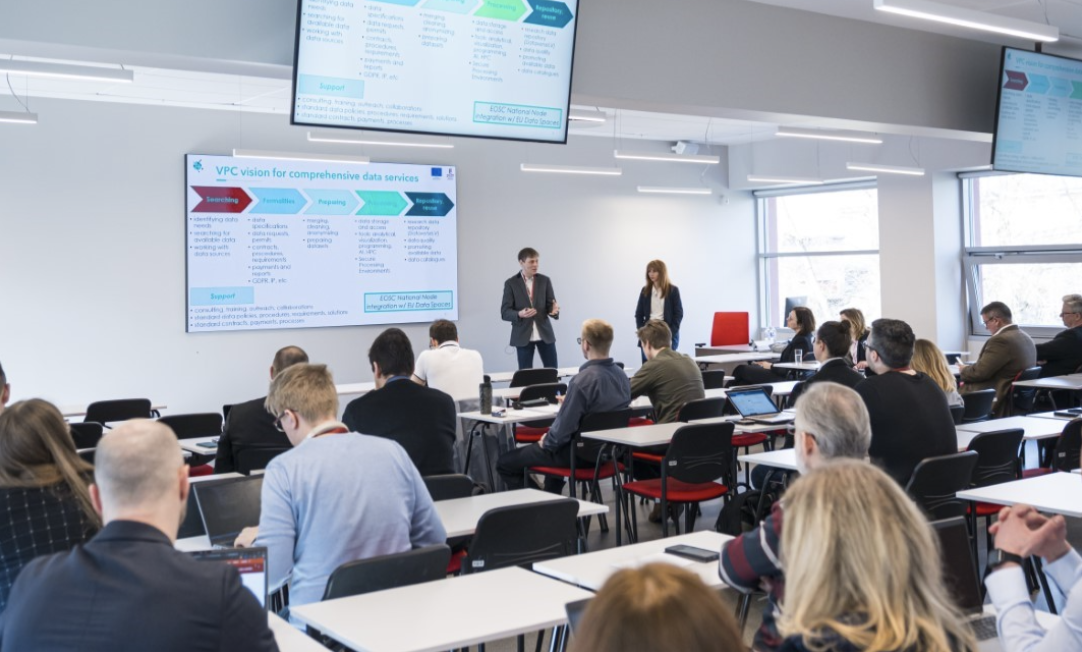
On March 25, 2025, as part of Science Week 2025 organised by Rīga Stradiņš University, the event "Empowering Academic Research with Microsoft: From Strategy to Practical Tips" was held, dedicated to strengthening the role of digital technologies, especially Microsoft tools, in academic research. Its goal was to bring together university management, researchers, and IT professionals to share experiences and provide practical advice on the use of digital solutions in research processes.
Representatives of the Latvian Data Stewards Network, Kaspars Bērziņš and Agate Jarmakoviča, spoke at the thematic session with a presentation "Curators at the Intersection of IT, Research, and Data – Building the Research Ecosystem". The presentation highlighted the importance of the Higher Education and Science IT Shared Services Centers' support for research and the role of data stewards in the research ecosystem, as well as the achievements, future plans and practical experience of the Data Stewards Network project in initiating the implementation of data management strategies in research institutions.
The event featured several keynote speakers, including:
- Jaye Richards-Hill, Microsoft Education Industry Director for Central and Eastern Europe, the Middle East and Africa;
- Ian Bayley, Head of Education at SIS Global;
- Stefan van Aalst, Director of anDREa B.V.;
- Jānis Grēviņš, Director of the Higher Education and Science Information Technology Shared Services Center.
The day focused on how digital tools can effectively support research processes and develop the academic environment. Special emphasis was placed on the capabilities of Microsoft's cloud services Azure, data visualisation and analytics with Power BI, as well as the potential of artificial intelligence solutions in academic work. Speakers shared institutional experience and provided recommendations on how to successfully integrate these digital solutions into university research processes, strengthening researchers' ability to structure, analyse and manage their data. The discussions also emphasised the strategic importance of data management as a foundation for high-quality, repeatable and internationally competitive research.
