
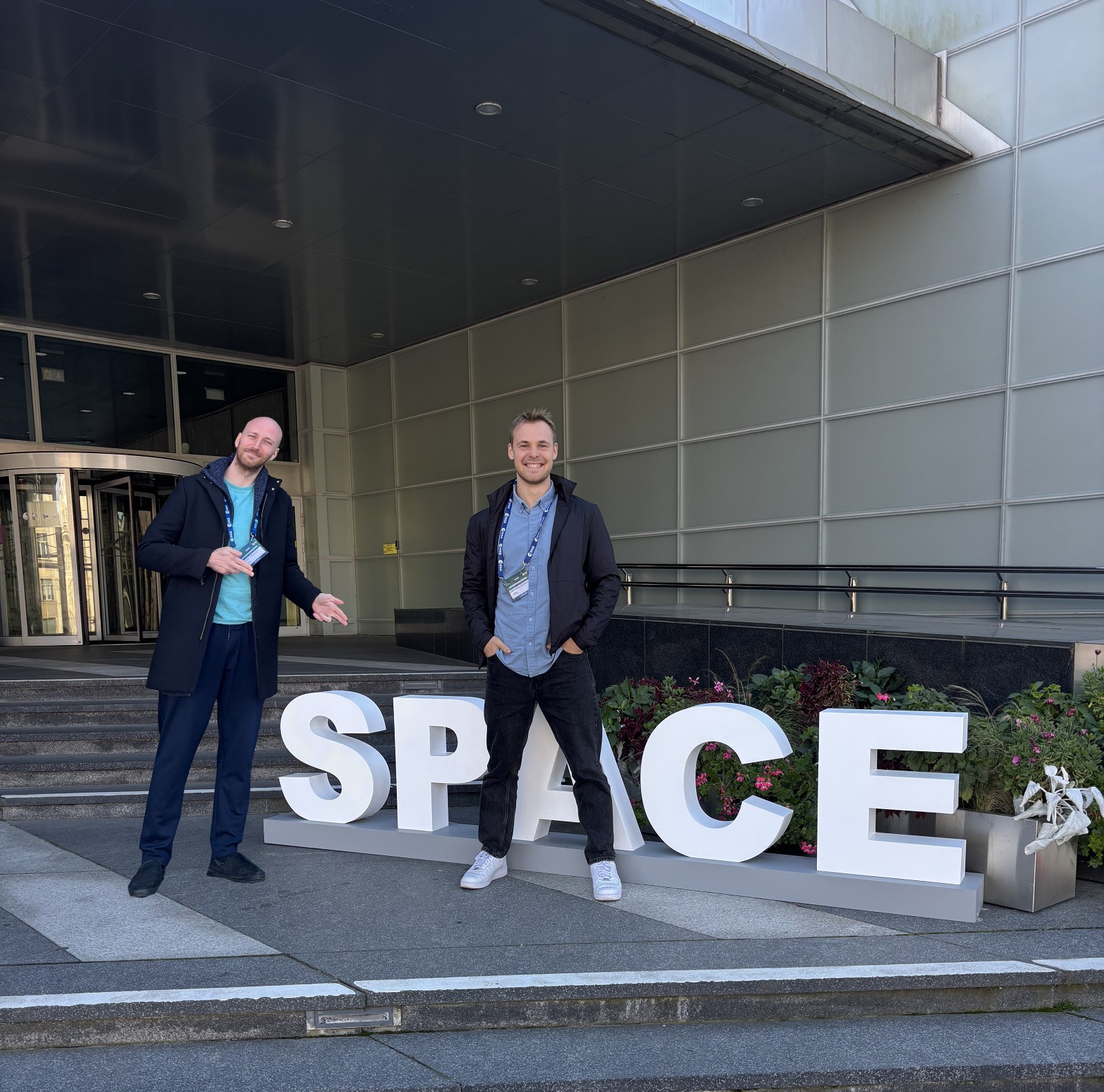
From August 30 to September 2, 2025, representatives of the Latvian Data Stewards Network Kristaps Oškalns and Mikus Melderis participated in the international conference BIG DATA FROM SPACE 2025 (BiDS 2025), which took place in Riga and brought together researchers, data engineers and industry representatives from Europe and other regions. The conference discussed the latest trends and solutions in the use of big data from space observations, promoting knowledge exchange and international cooperation.
Particularly valuable were the presentations in the session “FAIR workflows” and the workshop “FAIR and Open Science in Action: An Introduction to EarthCODE”, which provided an opportunity to get acquainted with practical solutions in creating FAIR workflows, as well as with open science tools in the analysis and use of large-scale satellite data.
At the conference, we learnt that the EarthCODE ecosystem (Earth Science Collaborative Open Development Environment) developed by the European Space Agency is widely used, which promotes the implementation of open science principles and FAIR data in Earth Observation (EO) research. Its component is the Open Science Catalogue, which provides a platform for publishing and providing open access to EO project results, datasets and analysis resources using the STAC (SpatioTemporal Asset Catalogue) metadata model and open-source solutions maintained by the EOX team.
The Jupyter Notebook environment, available on virtual workstations and allowing the creation, testing and reuse of analytical workflows directly in the cloud, is widely used for data analysis. This approach is also integrated into the Copernicus Data Space Ecosystem (CDSE) environment, which provides direct access to Earth observation data and allows them to be processed without downloading them locally.
Special attention at the conference was paid to the use of the DataCubes data model in big data processing and the integration of Sentinel-1 satellite data into open science tools. This data serves as a basis for the development of new open-source solutions and their implementation on the CDSE openEO platform, which uses a standardised API to allow users to develop, publish, and reuse EO data analysis processes.
The BiDS 2025 conference allowed data curators to gain insight into the specifics of Earth observation research data management, thereby strengthening the competences of the Latvian Data Curators Network to support researchers.
