
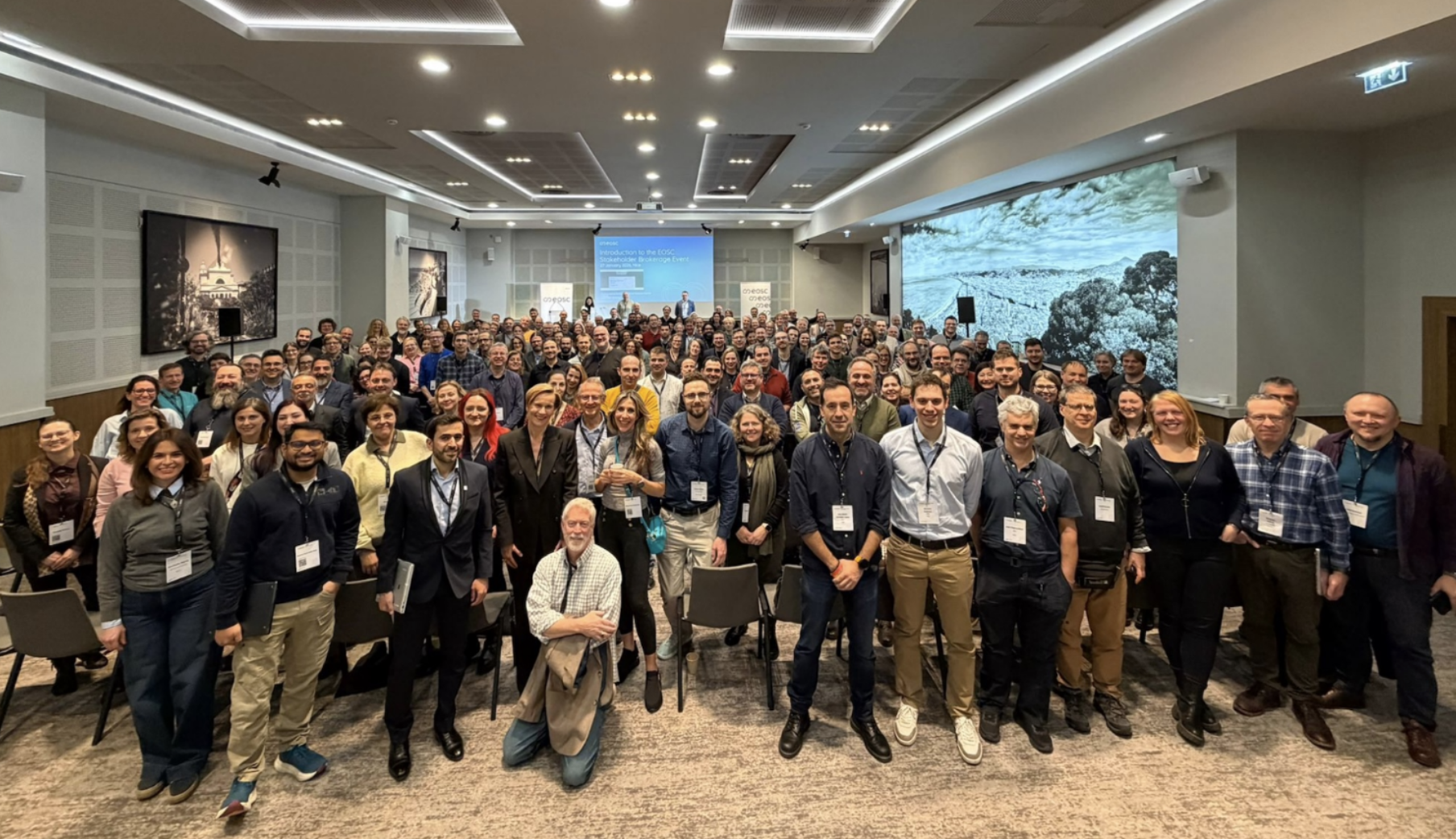
Kristaps Oškalns, a representative of the Latvian Data Curators Network and administrator of the DataverseLV repository, participated in the EOSC Winter School 2026, which took place in Nice, France, at the end of January. At the event, experts and infrastructure maintainers from all over Europe discussed the technical and organisational prerequisites for national data services to successfully integrate and function in the European Open Science Cloud (EOSC) federation.
The event programme was focused on data and service interoperability at the international level. A deeper understanding was gained of the critical importance of the DCAT-AP metadata standard so that Latvian research data would be automatically found in European portals. The RO-Crate (Research Object Crate) standard was highlighted as an important future solution, which allows exporting datasets together with their context in structured packages, ensuring higher reproducibility. The FAIR Implementation Profiles (FIPs) methodology was also learnt – a way for repositories to declare their used standards in a machine-readable format, allowing the EOSC infrastructure to automatically recognise and validate the service’s compliance with the FAIR principles.
Much attention was paid to the development of competencies and the EOSC Academy initiative. It is a new, centralised platform designed to provide high-quality training materials and standards for all members of the federation. For Latvian data curators, the EOSC Academy will serve as a vital resource for skill development, offering structured training programmes on the management and use of EOSC services, as well as the opportunity to engage in content creation themselves in the future.
In addition to technical solutions, trust and service management models necessary for the operation of EOSC Nodes were also learnt. In order for DataverseLV to become a full member of the federation, it is essential to ensure federated authentication, e.g., EduGAIN, and implement structured service management based on the FitSM standard. It is planned to use the FIDELIS TTRAM matrix to assess the transparency and maturity of the repository, which will help identify and improve long-term data retention policies and processes.
The knowledge gained during the training will be integrated into the DataverseLV development strategy, strengthening the role of the Latvian Data Curators Network. The goal is to build this network into a national competence centre that can not only ensure the operation of a local repository but also act as a knowledgeable support point, helping Latvian researchers navigate and fully utilise the vast computing and data opportunities offered by the EOSC federation.
