
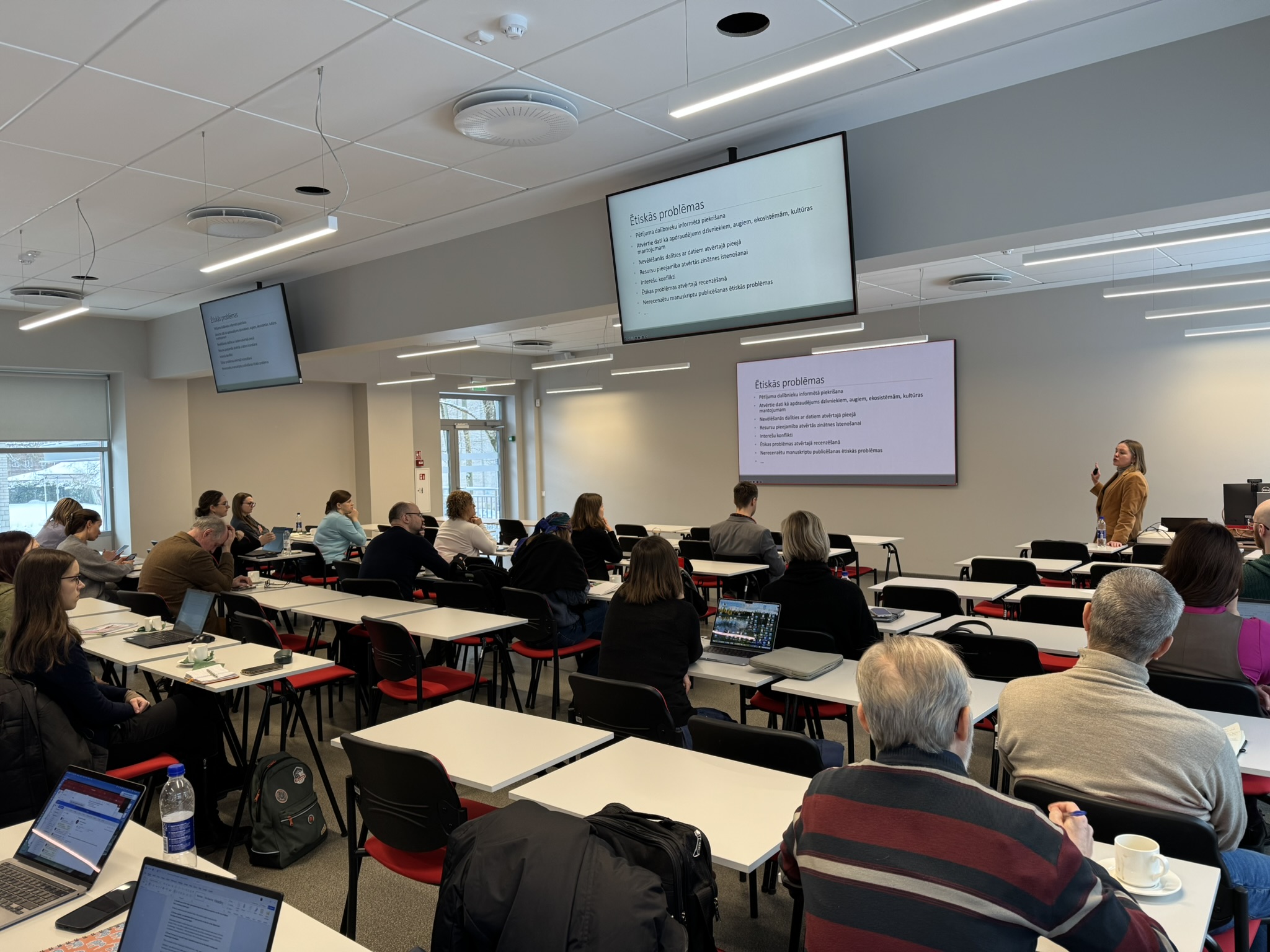
On January 28, 2026, a seminar “Ethical Aspects of Research Data Management” was held both online and in person at Rīga Stradiņš University, bringing together more than 350 researchers, academic staff representatives, and industry experts from various institutions. The large number of participants, active discussions, and numerous questions demonstrated the relevance and importance of data ethics issues in modern research.
The seminar was led by Signe Mežinska (Dr.sc.soc., MS in bioethics). The seminar consisted of topics regarding the difference between ethical/unethical and legal/illegal behaviour, emphasising that following the law does not always mean ethical behaviour and included real examples and data scandals to show the risks that arise when personal data is used without sufficient information and consent. The tasks of ethics committees, their historical development (Nuremberg Code, Declaration of Helsinki, Belmont Report, etc.) and their role in research oversight were also discussed. The seminar participants were introduced to the legal framework in Latvia and the European Union, e.g., which studies in Latvia require an opinion from an ethics committee, as well as the requirements of EU and national legislation.
S. Mežinska emphasised the fundamental rights of research participants at the seminar: informational awareness, voluntariness, the right to refuse or withdraw from the study and the protection of personal data. Thus the concept of informed consent, types, basic elements (information, volunteerism, decision-making capacity) and quality criteria were discussed in detail. The seminar also addressed such topics as data processing principles, data manager responsibility, differences between anonymisation and pseudonymisation, as well as special research groups (involvement of minors and persons who are unable to express their will in research and requirements for the consent of parents or legal representatives). Researchers were encouraged to always assess the risks to research participants and the benefits to society, emphasising the principle of proportionality.
During the discussions, participants actively asked questions and shared experiences, which demonstrated both the complexity of the topic and its relevance in various research fields. The seminar served as an important platform for knowledge exchange and raising awareness about responsible and ethical data management in modern science.
A recording of the seminar and presentation (both in Latvian) is available to anyone interested.

