
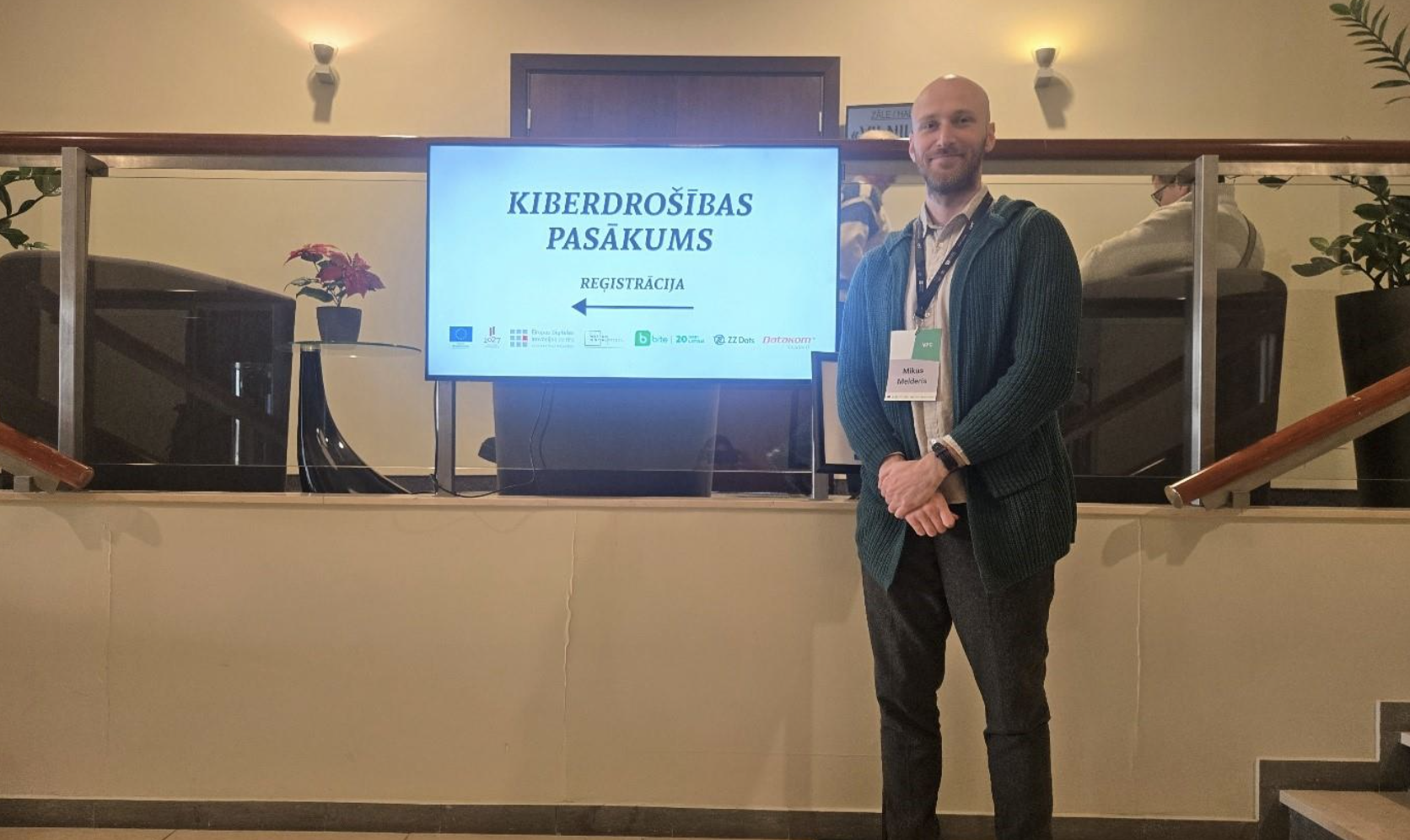
On January 20, 2026, the Kickstart Cybersecurity Training event organised by the European Digital Innovation Center took place, which was attended by data steward Mikus Melderis. The event gave both practical insight into actions during cybersecurity incidents and updated everyday security principles in organisations.
The first part of the day included an interactive lesson (cybersecurity training), during which participants played out situations related to IT security incidents and discussed the most effective actions, distribution of responsibilities and decision-making.
The event continued with a focus on specific technical and organizational solutions. It examined how network solutions and infrastructure maintenance approaches affect the overall level of security, as well as access security issues and authentication practices in the digital environment. Cybersecurity hygiene, both employees’ daily habits and the most typical risks, including phishing, were separately updated. The discussions also highlighted the role of cloud services in strengthening security, especially in situations related to data theft or ransomware, and discussed the available support options for organizations.
Several important lessons were learned during the event. Cybersecurity preparedness requires a clear action plan for incidents and emergencies, and the organization must have a designated responsible person who can make decisions. It was emphasized that effective security is based not only on technical solutions, but also on practically applicable guidelines and regular employee training, as well as audits that help assess existing solutions and vulnerabilities.
In the context of access security, the importance of multi-factor authentication and biometrics was highlighted, as well as the implementation of modern authentication mechanisms. As a reminder of the most common risks posed by outdated software, as well as everyday security habits, such as separating work and private accounts and password practices, where a longer password is often more secure, but changing it is especially important after an incident, rather than due to a formal schedule.
The event also touched on the importance of regulatory frameworks, including the requirements of the NKDL and NIS2, emphasizing the role of policies and guidelines in the management of cybersecurity in organizations.
Overall, the event provided participants with a structured and multifaceted insight into cybersecurity issues, emphasizing that sustainable security is formed from a combination of technology, processes and human factors.

