
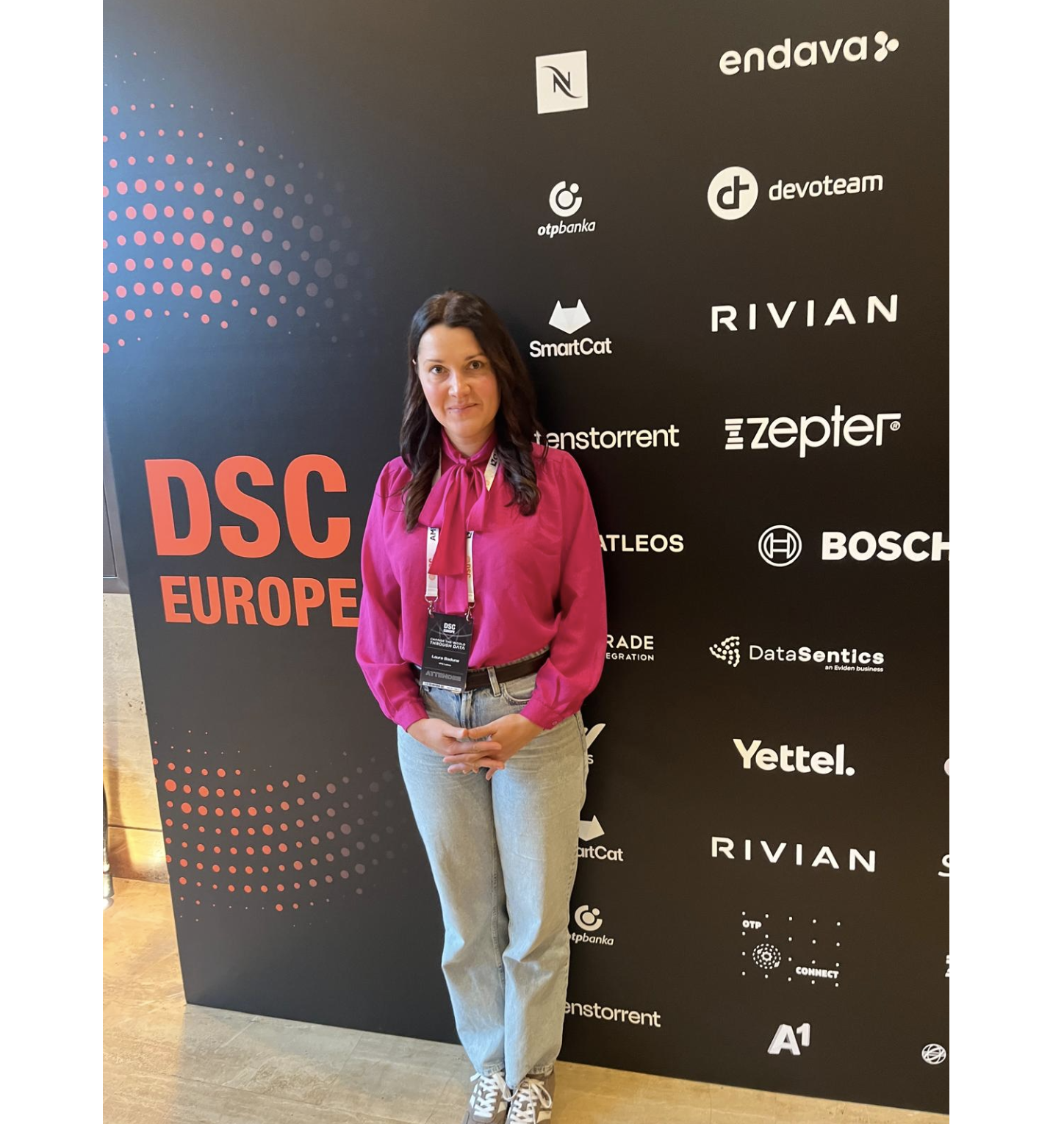
From November 18 to 22, Rīga Stradiņš University data steward Laura Badūne participated in the Data Science Conference (DSC) Europe in Belgrade, Serbia. The conference brought together industry experts, data scientists, data engineers and analysts, as well as researchers and academics, business and team leaders, and other representatives who work on a daily basis or are interested in the opportunities provided by artificial intelligence (AI) and its application in data-related industries.
The conference featured over 200 presentations and panel discussions. Topics ranged from using artificial intelligence to enhance productivity and apply its tools in the learning process to using AI safely in research and innovation. The importance of data quality and interoperability in optimising AI was also emphasised.
Several important lessons were learnt during the conference:
-
Although AI is often positioned as a significant tool for increasing productivity, in practice the benefits of its use are limited to only about a 5% increase.
-
To reduce the gap between expected and actual benefits, a clear AI implementation strategy, measurable goals and a deliberately chosen place for innovation are needed.
-
Data management must be planned and integrated into data projects in a timely manner. Otherwise, it will not be effective and it will be difficult to attract resources to it.
-
A large number of companies need support in change management, because AI is not only an engineering problem but also includes organisational and human resource aspects.
-
The safe use of AI solutions requires specialists who are able to verify the content prepared by AI and prevent AI hallucinations in a timely manner. Continuous improvement of the competencies of such specialists is an essential prerequisite for the sustainable use of AI.

