
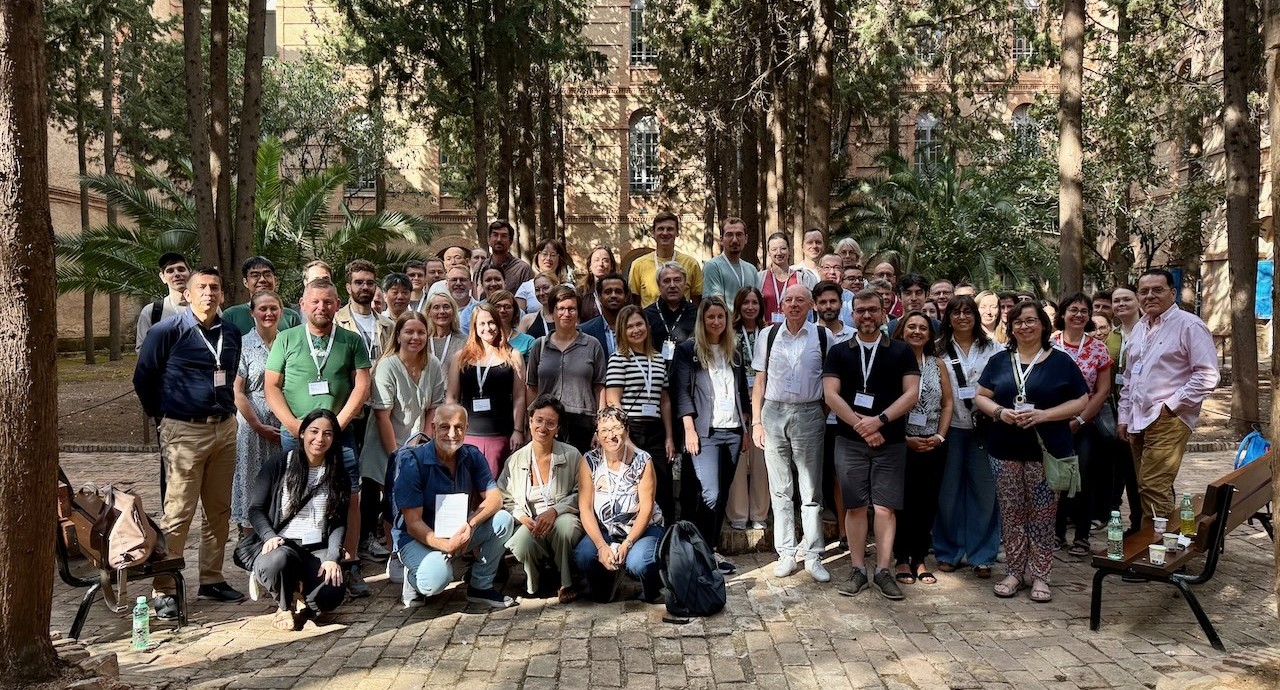
The annual European Summer School for Scientometrics 2025 (ESSS2025) took place in Spain in September. It is an internationally highly regarded educational event on the assessment of research achievements, mainly the quantitative analysis of science based on publication data.
The summer school programme in 2025 included a theoretical insight into data sources, data quality and normalisation, classification systems, bibliometric indicators, altmetrics and the context of open science and the latest trends, as well as intensive practical classes. The summer school also included a discussion on the responsible use of metrics and best practices in the context of DORA/CoARA. In addition, presentations were also given by representatives of Digital Science, Clarivate, Elsevier, and OpenAlex.
The practical classes provided an opportunity to explore tools and platforms for data retrieval, processing and analysis, using bibliometric data as an example. Participants learnt about processes such as data source selection, data processing, cleaning, visualisation and network analysis in practical exercises, including an organised opportunity to apply programming skills (R).
The European Scientometrics Summer School was attended by more than 60 participants from different countries and even continents, including the representative of Latvian data stewards – Gita Rozenberga (VPC). Gita admits that she has gained significant theoretical and practical knowledge in working with data, the scientific achievement measurement system of research data sites, the latest trends in research outcome metrics in the context of open science and increasing the potential for reuse. Gita gained an understanding of a critical approach to data processing tools, platforms and the interpretation of analysis results, the importance of metadata elements in data analysis processes, as well as the multidimensional nature of scientific assessment.
The ESSS2025 experience highlighted the close connection between quality research data management and effective scientific assessment, emphasising the role of data stewards in the research ecosystem, and at the same time revealed the potential of scientometric tools and methods in data management practice.
